Slot 20
What You’ll Need
Before you add any properties, take a few minutes to configure your account. This makes the rest of your experience smoother and ensures you do not miss important alerts.
Build the record before the estimate
A property record should contain enough context for someone else on your team to understand what is being valued. Add the location, working interest, net revenue interest, county, basin, and any known operator details before attaching files.
If information is incomplete, save the record anyway and mark the missing assumptions in the notes. It is better to make the uncertainty visible than to bury it in a spreadsheet or email thread.
Recommended first fields
Property name, county, state, and operator.
Ownership assumptions and effective date.
Before you begin
Your login credentials. Have your email address and password ready. If you want to fine-tune notifications, think about whether you prefer real-time alerts or a weekly summary.
Before you add any properties, take a few minutes to configure your account. This makes the rest of your experience smoother and ensures you do not miss important alerts.
Your Profile
Navigate to your account settings — look for your name or profile icon in the upper right corner. Confirm your name and email address are correct. These appear on any reports you generate and are how we reach you. If you need to update your email or change your password, do it here.
Notifications
This is the most valuable part of account setup, and the easiest to overlook. The platform can notify you when things change on your properties — new permits filed, wells spudded, wells completed, and changes in your estimated revenue or asset value.
Turn on alerts for what matters most to you. If you are actively monitoring properties or evaluating offers, turn on activity and value alerts. If you prefer a lighter touch, a weekly summary is a good starting point. You can adjust these any time.
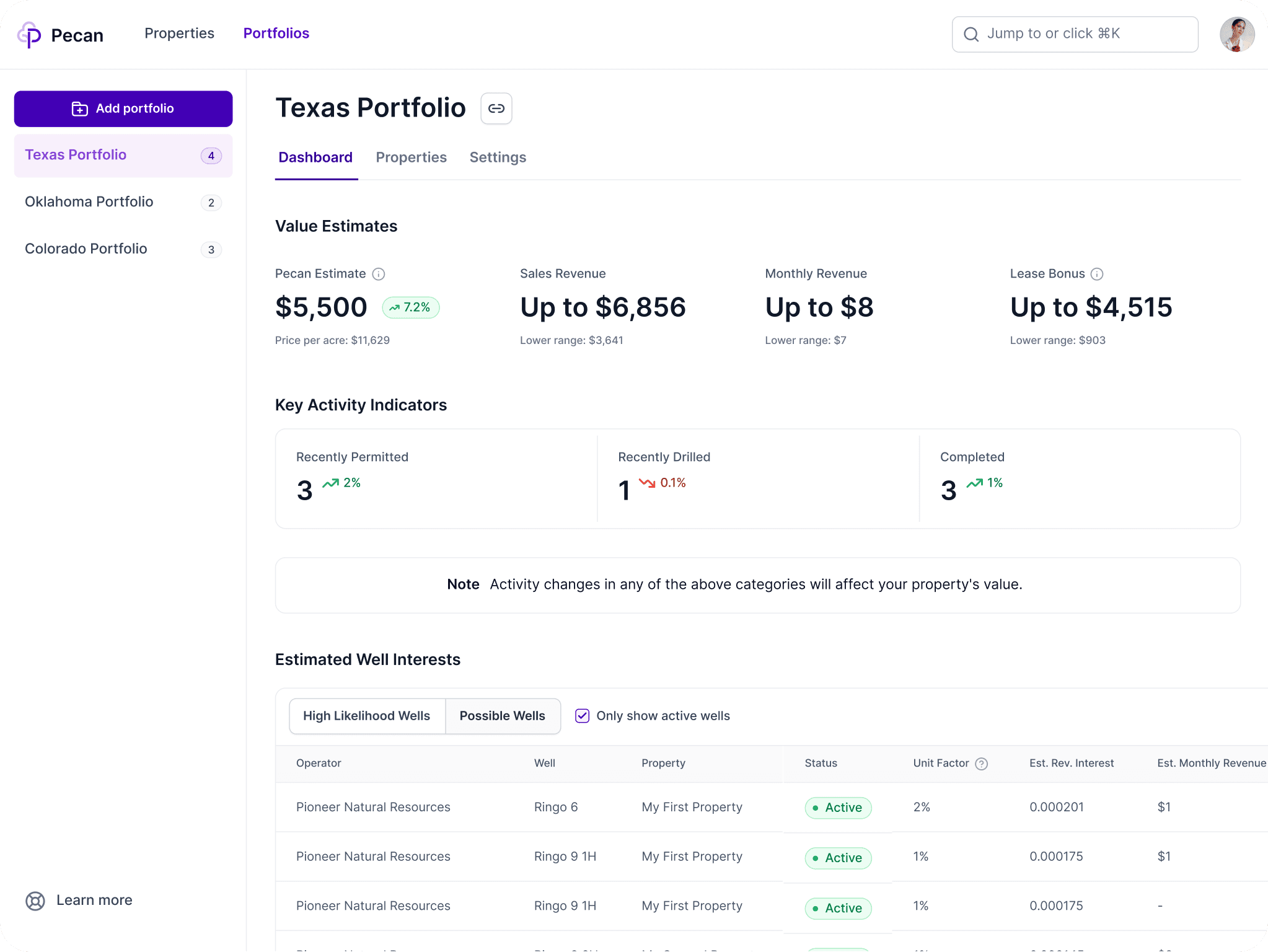
Portfolios
The platform organizes your properties into portfolios — collections of tracts you manage together. If you own minerals in multiple areas, you may end up with more than one portfolio. If you are managing interests for family members or a trust, those would typically live in separate portfolios with their own setup.
That is all for account setup. The most important steps are confirming your email and turning on notifications.